Top Choice
1

Emberbet
- Massive Game Library
- Hybrid Platform (Casino & Sportsbook)
- Crypto-Friendly Payments
Bonus
250% UP TO £2500
+ 100 FS ON FRUITERFLY!
+ 100 FS ON FRUITERFLY!

NON GAMSTOP CASINOS UK 2026
Non GamStop casinos for UK players sit outside the UK Gambling Commission licence + the GAMSTOP self-exclusion register, running under offshore licences (Curacao GCB, Anjouan, Malta Gaming Authority, Kahnawake, Isle of Man). The shortlist below tracks the operators our team plays through end to end each month, with honest editorial disclosure of every third-party dispute pattern before we rank a site.
 Written by
Tim Mirroman
Last updated
Written by
Tim Mirroman
Last updated















Every operator ranked in the shortlist above has a full review on this site. Reviews are structured, updated on the same monthly cadence as the ranking, and disclose Casino Guru safety indexes, AskGamblers records, and Trustpilot signals factually rather than sanitised. Here are the current top-ranked entries with the review’s core verdict + a link to the full page.

Ranked highest on our shortlist. October 2025 launch under Anjouan licence ALSI-202502014-FI1, operated by Green Champions Leader SRL (Costa Rica). The proposition is a single crypto balance across casino, sportsbook, esports and virtuals in twelve coins, with 80 plus studios including Evolution + Playtech Live + Hacksaw.
Best for: multi-vertical crypto players who want slots, in-play football and esports settled from one crypto balance without juggling separate accounts.

Anjouan-licensed 2025, Green Champions Leader SRL. Welcome is 350 percent up to 2000 euros plus 1000 free spins split across three deposits. 10000 plus titles from around 89 studios (Pragmatic Play depth), and the pirate framing genuinely lives inside bonus naming, tournaments and the weekly promotions calendar rather than sitting as a superficial skin.
Best for: players who want a themed offshore casino with a spins-heavy welcome plus casino, sportsbook, crash and live tables on one wallet.

Anjouan-licensed 2025 with parallel domains across UK and AU markets, all under Green Champions Leader SRL. The differentiator is the only publicly documented five-tier VIP ladder on the shortlist, running Fledgling through Nightwing, Nightingale, Raven Master and Raven King, with 3 to 28 percent no-wager cashback and sub-one-hour payouts at the top.
Best for: loyalty-focused players who plan to climb a VIP ladder with named tiers, clear cashback percentages and progressively faster withdrawal SLAs.

The only Curacao-licensed brand on our shortlist (licence 152449, Famagousta B.V.), launched 2025. Widest crypto rail we tested: BTC, ETH, USDT, USDC, LTC plus BNB, TRX, XRP and Binance Pay integration. 100 plus studios and 10000 to 14000 titles depending on region.
Best for: BSC-ecosystem crypto players who want BNB, TRX, XRP or Binance Pay specifically, and value coin coverage breadth over safety score.
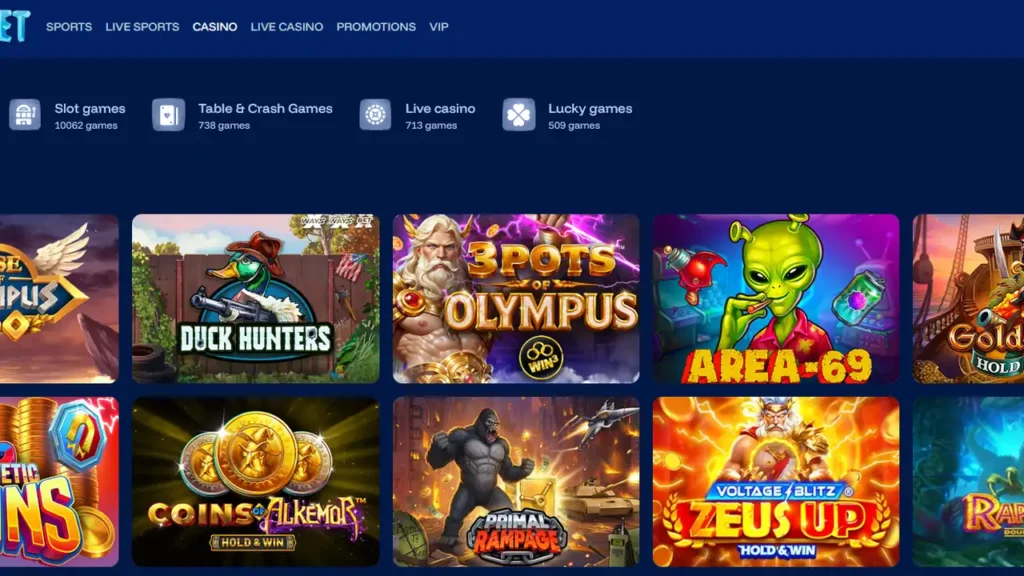
Anjouan-licensed 2026 under Green Champions Leader SRL. Largest headline welcome on our shortlist at 4000 euros plus 4000 free spins across three deposits, and the deepest inventory too, 97 plus studios, 700 plus live tables, 13000 plus slots, fully integrated sportsbook with 35000 monthly betting options.
Best for: long-tail players who want the biggest headline welcome plus the deepest live and crash inventory on one wallet, and who read the bonus win-caps carefully before depositing.

Non GamStop casinos are online operators serving UK players from outside the UK Gambling Commission licence framework. Because they hold offshore licences from bodies such as Curacao GCB, Anjouan, the Malta Gaming Authority, Kahnawake, or the Isle of Man Gambling Supervision Commission, their registration flow does not query the GAMSTOP self-exclusion register at signup, and their operating rules are not bound by the UKGC’s Licence Conditions and Codes of Practice.
The consistent trigger is friction. UKGC operators enforce a stack of mandated behaviours on their licensees: five pound spin caps for players aged twenty five and over, two pound spin caps for players aged eighteen to twenty four, reality-check pop-ups every thirty to sixty minutes, mandatory affordability checks at one hundred and fifty pounds per month of deposits, a credit card ban since April 2020, and verification before the first deposit clears. Offshore operators sit outside every one of those rules. Bet size, session length, deposit cadence, and identity checks operate on the player’s terms rather than on the licence’s.
GAMSTOP distributes its exclusion list only to UK Gambling Commission licensees. Offshore operators are outside that distribution network and have no legal basis (and no technical hook) to query the register. A player who signed up to GAMSTOP for a six month, one year, or five year exclusion window keeps working accounts at offshore operators throughout that window.
Universal frictions the UKGC imposes on regulated licensees versus how offshore operators handle the same dimensions. Every line item translates directly into play experience.
| Feature | Regulated UKGC licensees | Recommended Offshore casinos |
|---|---|---|
| Spin cap for slots | No 5 GBP for 25+, 2 GBP for 18-24 | Yes No spin caps imposed |
| Reality check pop-ups | No Every 30 to 60 minutes, mandatory | Yes None |
| Affordability check trigger | No 150 GBP per month deposits | Yes None imposed |
| KYC timing | No Before first deposit clears | Yes Deferred to first large cashout |
| Welcome bonus size | No Around 100 percent of first deposit | Yes 200 to 400 percent typical |
| Credit card deposits | No Banned since April 2020 | Yes Accepted at most operators |
| Cryptocurrency deposits | No Not accepted (LCCP restriction) | Yes BTC, ETH, USDT, USDC and more |
| Payout speed | No 1 to 5 working days bank rail | Yes 10 to 30 minutes on crypto |
| Player winnings tax | Yes Tax-free under UK law | Yes Tax-free under UK law |
The UKGC framework is designed to constrain licensee behaviour toward what the regulator considers safer play. That produces predictable frictions for adult players who never triggered the concerns the framework was built for. Offshore operators, licensed elsewhere, are not bound by those constraints and let the player govern their own play parameters.
The five pound and two pound spin caps at UKGC operators cap volatility and cap upside. Offshore operators publish per-slot minimum and maximum bets set by the studio (typically zero point one zero to five hundred pounds per spin depending on game). Higher volatility slots and high-limit rooms unlock at offshore that never appear at UKGC scale.
UKGC operators inject a reality-check pop-up every thirty to sixty minutes that demands attention. Offshore operators run continuous play, and if the session includes a break, it is one the player set themselves in the account preferences. The absence of forced pauses is one of the most cited reasons players move offshore after a period at UKGC sites.
UKGC operators run identity and address verification before your first deposit clears + affordability review at one hundred and fifty pounds per month deposit-cadence since 2024. Offshore operators typically defer KYC entirely until a first large cashout (thresholds range around two thousand to five thousand pounds equivalent). Below that threshold most players never verify.
UKGC bank-rail withdrawals settle in one to five working days, sometimes longer over bank holidays. Offshore operators accept crypto directly (BTC ten to thirty minutes, USDT on Tron sub-thirty seconds), e-wallets settle same-day, and instant-banking rails like Trustly or Volt clear within hours.
Every operator on the shortlist above is tested by our team end to end each month before we rank it. The tests are structured, repeatable, and produce the same signals across brands so ranking movements reflect real changes at operators rather than editorial mood. Here is what the test covers, dimension by dimension.

The first thing we verify is the operator’s licence: which body issued it, which jurisdiction it sits in, and how long the operator has been serving players under that licence. Curacao GCB and Kahnawake operators with three or more years of stable operation are treated as established. Anjouan is newer (ALSI licences appeared at scale from 2024) so we cross-check Anjouan operators against Casino Guru and AskGamblers dispute records more aggressively. Malta Gaming Authority and Isle of Man are top-tier but rare on the non-GamStop vertical because many voluntarily block UK access. Every operator’s licence body + licence number appears on its review page.
We read every welcome bonus’s terms and conditions before a single spin. Headline match percentages are easy to publish but the numbers that decide whether the bonus is claimable are the wagering multiplier, the max bet during wagering, the game-contribution rates, the expiry window, and any max-win-relative-to-deposit clause. Two hundred percent up to a large cap at thirty times wagering is materially better value than three hundred and fifty percent at fifty times with a five pound max-bet. Every review breaks the bonus down to the level a player needs to decide whether to opt in.
We deposit and withdraw at every operator across their published rails: crypto (BTC + at least one stablecoin), e-wallet, instant banking, and card where accepted. Deposit speed, withdrawal speed, withdrawal caps (daily + monthly + per-transaction), and any minimum withdrawal thresholds get logged. A ninety percent match welcome bonus at an operator with a five hundred pound daily cap is not the same play experience as the same bonus at an operator with a five thousand pound daily cap. Payout reality often diverges from advertised speed, and the reality is what we log.
Every operator gets checked against Casino Guru’s Safety Index and AskGamblers’ CasinoRank. We log every complaint filed at those platforms, whether it was resolved, rejected, or left unresolved, and the pattern of disputes (payout delay, bonus confiscation under T and C clause 12.10, arbitrary balance reduction, KYC stall). Operators with unresolved complaints or systemic dispute patterns get flagged in the review’s honest-disclosure section, always factually, never sanitized. Trustpilot signals get weighted lower because they are more noise than signal, but we still log them.
Every operator on the shortlist gets retested every calendar month. T and C changes, bonus revisions, licence renewals, dispute pattern shifts, and payment-rail additions all get caught in the retest cycle. If an operator’s Casino Guru safety index drops between cycles, we retest before the next scheduled cycle and update the ranking. If an operator’s payout speed regresses (advertised instant, actual one week), the ranking moves. The shortlist above is not static; the plugin renders the current active ranking at any moment.
| Curacao Gaming Control Board | Longest-standing offshore igaming licence, established 1996. Recent 2024 reform introduced individual sub-licence numbers (previously master-licence pass-through). Solid dispute mechanism via GCB itself. Most operators on the shortlist run under Curacao. |
|---|---|
| Anjouan iGaming (Union of Comoros) | Newer entrant, scaled from 2024 with ALSI licence format. Dispute mechanism thinner than Curacao, so we lean harder on Casino Guru and AskGamblers records for Anjouan operators. Fast issuance means many new brands appear here. |
| Malta Gaming Authority (MGA) | Top-tier EU regulator, strong dispute mechanism, mandatory RNG certification via GLI or iTech Labs. Rare on non-GamStop vertical because many MGA operators voluntarily block UK addresses. |
| Kahnawake Gaming Commission | Established 1996 (Mohawk Nation, Canada). Small operator pool but includes some of the longest-running offshore brands. Solid dispute record. |
| Isle of Man Gambling Supervision Commission | Top-tier UK-adjacent regulator (Crown Dependency). Rare on non-GamStop vertical for the same reason as MGA. Strong player protection standards when it does appear. |
A serious offshore operator publishes clean information across a small number of critical dimensions. If any of these signals are missing, ambiguous, or contradicted by third-party dispute records, we deprioritise the operator in the ranking. Here is the checklist we run through, every operator, every retest cycle.

The operator publishes its licence number in the footer, and the licence number resolves at the issuing body’s public register. Curacao licences resolve at the Curacao Gaming Control Board’s register. Anjouan ALSI numbers resolve at the Anjouan Gaming Authority’s public list. If the footer shows a licence badge with no clickable number or no verifiable resolution, the operator gets flagged.
Serious operators run games from at least fifty licensed studios, and typically two of the following premium names: Pragmatic Play, NetEnt, Evolution (for live tables), Hacksaw Gaming, Nolimit City, Push Gaming, Play + n GO, Yggdrasil. Studio partnerships require the operator to be settled enough for the studio to license its content. A thin provider stack with only long-tail studios is a signal the operator is either new, under-scaled, or has commercial issues with premium studios.
An operator serving UK players should accept at minimum: BTC + one stablecoin (USDT or USDC), Visa + Mastercard debit, and one instant-banking rail (Trustly, Volt, or equivalent). Bonus if e-wallets (Skrill, Neteller, MuchBetter) are also present. Payment coverage narrower than that limits deposit options and often correlates with payment-processor churn (a bad signal for operator stability).
The single strongest external signal. We check every operator’s Casino Guru Safety Index score, the number of complaints logged, the resolved-vs-unresolved-vs-rejected split, and the pattern (is it payout delay, bonus confiscation under a specific T and C clause, arbitrary balance reduction, or KYC stall). A safety score below 3.0 with an active clause-12.10 confiscation pattern is a red flag. A safety score of 5.0+ with only isolated complaints is a positive signal.
Every operator’s terms get read line by line. Common unfair clauses to watch for: max-win-relative-to-deposit caps (buried in bonus terms, limits how much you can cash out even after clean play), dormant-account balance forfeit at eighteen or twenty four months, Martingale prohibition (any progressive bet pattern voids the bonus), single-deposit maximum cashout multiples (typically ten to fifteen times deposit), and vague clauses citing bonus abuse without evidence requirements. Casino Guru flags these clause-by-clause on its per-operator review. We surface every flagged clause in the individual reviews.
Serious operators run twenty-four seven live chat with response times under five minutes on typical queries, at least one email channel, and often a phone line. Operators running only email or only ticket-based support signal thin operational scale. A live chat that answers KYC or withdrawal questions substantively (not just canned replies) is a strong positive signal.
The workflow from landing on the shortlist to a first deposit and cashout takes roughly thirty minutes end to end if you have crypto ready, or forty five minutes if you need to buy crypto at an exchange first.
Each entry above shows licence body, welcome bonus headline, minimum deposit, coin coverage, and current safety index. Pick two or three operators whose licence body and welcome structure match what you want to play. Higher-rated entries have stronger third-party signals; lower-rated entries typically have a bigger headline welcome but weaker dispute records.
Every operator on the shortlist has a full review linked from its card. The review breaks down licence details, bonus terms line by line, payment rails, KYC trigger, Casino Guru safety index, and honest-disclosure of any dispute pattern. Read the review before opening an account.
Wagering multiplier, max bet during wagering, game contribution rates, expiry window, and max-win-relative-to-deposit clauses all decide whether the bonus is claimable at your typical play pattern. If any of those disqualify you, do not claim the bonus but still play the operator.
Most offshore operators take email + a receiving wallet or username at signup. No address, no phone, no ID upload at this stage. Confirm your account by clicking the verification email link.
Crypto (BTC, ETH, USDT, USDC, LTC) or fiat via card/e-wallet depending on the operator. Crypto minimums typically start at the equivalent of twenty pounds. Read the deposit fee schedule before you send.
If you claimed the welcome bonus, every bet must stay under the max-bet cap (typically five pounds equivalent) or the operator can void the bonus and any winnings derived from it. Slots contribute one hundred percent, live tables typically ten to twenty percent, sportsbook zero to fifty percent depending on operator.
Cashout to the same wallet you deposited from. Amounts under two thousand to five thousand pounds equivalent typically process without KYC. Above that, prepare passport and proof of address for the one-time verification. Verified accounts stay verified for subsequent cashouts.
Beyond the head-keyword shortlist, the site runs dedicated guides for the angles UK players most commonly filter on. Each guide takes one dimension deep enough to decide between operators on that dimension alone.
Every operator ranked by coin coverage and crypto welcome track, including which coins each accepts and how the crypto-specific bonus track compares against the fiat welcome. See the crypto non-GamStop casinos guide for the coin-by-coin breakdown.
The subset of the shortlist where KYC is deferred to a large cashout only, plus the operators with the highest cashout thresholds before verification kicks in. See no-verification non-GamStop casinos for the threshold-by-threshold ranking.
Operators ranked by realised payout speed across crypto, e-wallets, instant banking, and cards. Includes weekend and out-of-hours timing that most speed rankings ignore. See the fast-payout guide.
The subset of the shortlist offering no-deposit free spins or a small no-deposit crypto bonus at signup, plus the wagering caps that determine whether the offer is genuinely no-deposit or just a token. See our no-deposit non-GamStop guide.
Universal explainer of wagering multipliers, sticky vs cashable bonuses, max-bet-during-wagering rules, game contribution rates, and how to compare two welcome offers on absolute expected value. See how bonus wagering rules work.
How to read a slot’s RTP, why studio-standard versus UKGC-compliance-variant RTP matters, volatility versus hit-frequency, and how to find the highest-RTP releases across offshore libraries. See the slot RTP guide.
Gambling Act 2005 scope (operators, not players), HMRC tax treatment of offshore winnings, cryptoasset framework, and CAP Code implications for UK residents. See the UK legal position on non-GamStop casinos.
Coverage scope, operator-side enforcement mechanism, why offshore sits outside the network, and the three exclusion periods (six months, one year, five years). See what is GamStop.
The removal procedure step by step, the twenty four hour cooling-off, what happens to your old UK accounts after removal, and the silent auto-renewal that catches most registrants. See how to cancel GamStop.

The shortlist above is maintained by an editorial team that plays through every listed operator each month. The lead reviewer is Tim Mirroman, an igaming reviewer focused on non-GamStop casinos for UK players. Every review carries his byline, his LinkedIn attribution, and a datePublished stamp so a reader can verify the freshness of the ranking.
Two things. First, we test every operator end to end each month rather than once at listing time. Second, we disclose Casino Guru safety indexes, AskGamblers complaint counts, and Trustpilot signals factually inside every review, never sanitized. Some operators on the shortlist carry low Casino Guru safety scores. We say so plainly instead of hiding it behind an affiliate-friendly editorial line. That means the ranking reflects real trade-offs, not marketing math.
The site earns from affiliate commissions when a reader clicks through to an operator and registers or deposits. The commission rate does not affect the ranking. Higher-commission operators do not get ranked higher. If we ranked by commission we would ship a different shortlist. What we optimise for is the reader coming back to the site next month with the same list still being the honest answer to the same question.
An online casino serving UK players from outside the UK Gambling Commission licence + the GAMSTOP self-exclusion register. These operators hold licences from Curacao, Anjouan, MGA, Kahnawake, or Isle of Man and are not required to query GAMSTOP at signup.
Yes. The Gambling Act 2005 licenses operators, not players. UK residents can legally register and play at offshore casinos. The enforcement risk sits with the operator (marketing to UK residents without a UKGC licence), not with the player.
Yes. Gambling winnings are tax-free under UK law regardless of where the operator is licensed. This applies to both regulated UKGC operators and offshore casinos. Only the operator pays any point-of-consumption tax where applicable.
GAMSTOP is a distribution network limited to UK Gambling Commission licensees. Offshore operators sit outside that network and neither query the register nor receive its exclusion list. A player registered on GAMSTOP still has working accounts at offshore casinos.
At signup, no. Most offshore operators accept email plus a receiving wallet or username with no address, phone, or ID upload. KYC is triggered only at first large cashout (typically two thousand to five thousand pounds equivalent). Below that threshold most players never verify.
Universal coverage is BTC, ETH, USDT (TRC-20 and ERC-20), USDC, and LTC. Common additions include BCH, DOGE, XRP, SOL, TRX, ADA, MATIC, AVAX, and DOT. Frostybet on this shortlist also accepts BNB and Binance Pay, which is uncommon.
Crypto rails: BTC ten to thirty minutes end to end, USDT on Tron sub-thirty seconds, USDC on Solana in seconds. E-wallets: same-day. Instant banking (Trustly, Volt): under two hours. Cards: twelve to seventy two hours. Bank wire: three to seven working days. Faster than UKGC bank-rail withdrawals at any comparable operator.
GladiatorsBet currently offers the largest headline welcome at two hundred and fifty percent up to four thousand euros plus four thousand free spins split across three deposits. Read the full bonus terms in its review; the headline is real but the three times to twelve times bonus win caps limit the practical maximum.
Yes. Most operators on the shortlist run Evolution Gaming (the industry standard) plus Pragmatic Play Live, Ezugi, or Lucky Streak. Live table variety typically ranges from seventy to seven hundred tables depending on operator scale.
Yes at most operators. UK card issuers occasionally block gambling-transaction merchant category codes at offshore casinos, but crypto rails (bought via a UK-registered exchange like Kraken, Coinbase, Bitstamp, or Gemini) work around that entirely. Card blocks vary by issuer and card type.
Some do. Spinny Casino runs sportsbook + esports + virtuals + casino on a single wallet. PiratePots + Reel Raven + Frostybet + GladiatorsBet all run integrated sportsbooks with a separate welcome track. If sportsbook access matters, it filters the shortlist directly.
The first escalation is to the operator’s own support. If unresolved, the second escalation is to the licence body (Curacao GCB, Anjouan Gaming Authority, MGA, or Kahnawake). The third escalation is to Casino Guru’s complaint resolution centre, which mediates disputes at scale and publicly logs the outcome.
Yes, always, even if the review has done it for you. Key clauses to check: max-win-relative-to-deposit, dormant-account balance forfeit at eighteen or twenty four months, Martingale prohibition, wagering multiplier, max bet during wagering, game contribution rates, and any single-deposit cashout multiple limit.
Yes. GAMSTOP does not distribute to offshore operators, so a player registered on the exclusion register still has working accounts at offshore casinos. The register does not block offshore access.
The shortlist is retested every calendar month. Rankings shift when Casino Guru safety indexes move, when new dispute patterns emerge, when bonus terms change, when payment rails are added or removed, or when licence status changes. The plugin above renders the current active ranking at any moment.